
What’s the difference between walnut flour and walnut meal?
If you’ve spent any time exploring gluten-free or grain-free baking, you’ve likely come across walnut flour and walnut meal. And if you’ve searched online for how to use them, you’ve probably seen dozens of websites claiming that you can make your own walnut flour at home with a simple blender or food processor.
Although people often use them interchangeably in recipes (and incorrectly on many labels), walnut flour and walnut meal are not the same—and understanding the difference is essential for consistent, high-quality baking results.
Let’s clear up the confusion, debunk the myths, and explain what actually sets these two apart.
What exactly is walnut flour?
Walnut flour is made by milling and sifting the ‘press-cake’ left behind after the oil has been extracted from walnuts. This flour retains the rich, mild, slightly sweet, and nutty taste of walnuts, but it’s finer and lighter in texture, having a lower oil content than walnut meal or ground walnuts.
Walnut flour is sometimes called “partially de-fatted,” a technical (and not very appetising) way of saying that some of the oil has been removed.
Walnut flour better absorbs liquid in batters, compared to walnut meal. It doesn’t contain gluten, so it’s great for gluten-free baking, although, like many gluten-free flours, it lacks the structure and elastic properties of gluten-containing flours.
If you’re not avoiding gluten, you can use walnut flour to replace a third of the wheat flour in regular cake/biscuit/bread recipes – this way you’ll combine the health benefits and flavour of walnuts flour with the textural benefits of wheat flour.
If you need your baking to be gluten-free, walnut flour will be interchangeable with many other gluten-free flours, so try using it in place of other flours in gluten-free recipes.
What is walnut meal?
You make walnut meal by grinding whole walnuts. Yes, you can make this one at home! You make walnut meal by finely chopping walnut kernels in a food processor or similar kitchen appliance.
You can definitely use walnut meal in cooking, just be aware that it will yield a heavier texture in cakes and other baking.
Are walnut meal and walnut flour interchangeable in recipes?
No! Walnut flour and walnut meal will behave differently in baking due to the difference in oil content. However, if you’re using them in a crumb (ie. crumbed fish or croquettes) then it probably won’t make a difference and substituting walnut meal for walnut flour (and vice versa) would be fine.
What’s the nutritional difference between walnut flour and walnut meal?
Both walnut flour and walnut meal are very good for your health, being relatively high in protein, omega-3s and fibre. The main difference is that walnut meal is around 70% walnut oil, and walnut flour is around 30% walnut oil.
Removing the oil from walnut meal produces a flour that is higher in carbohydrates (15% versus 3%), protein (27% versus 14%), and fibre (12% versus 6%).
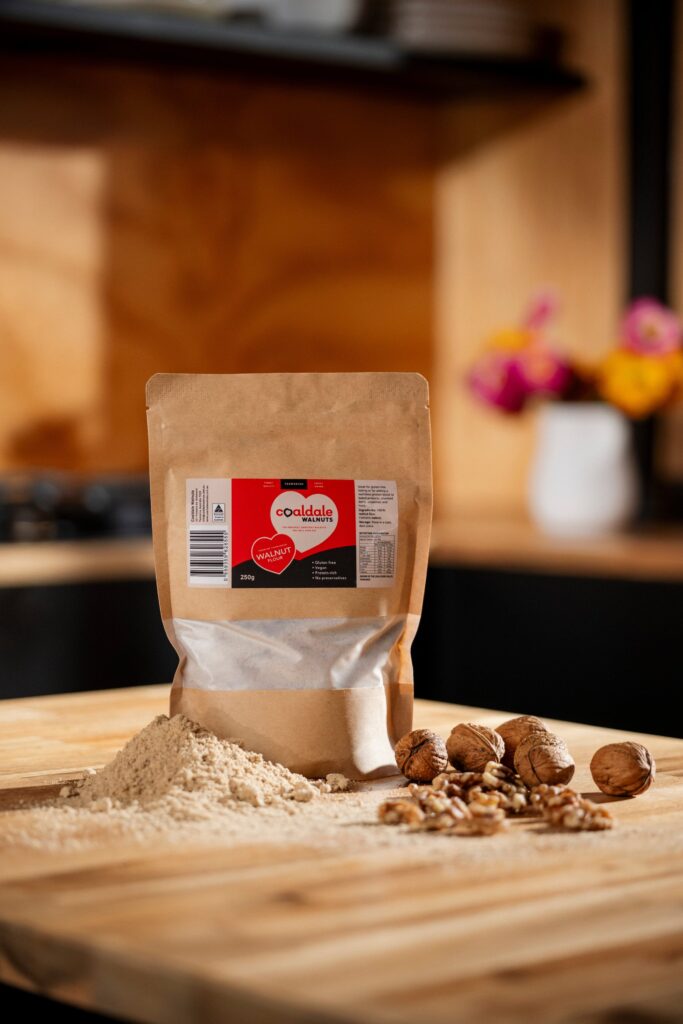
Walnut Flour
Lighter than walnut meal, our naturally gluten-free flour is versatile and perfect for baking, adding to sauces and smoothies, as well as use in vegan and low-carb diets.